6 Essential Equipment Upgrades for High-Volume Quarry Operations
In most cases, quarries are not limited by the power of the crushers but instead lose flow because the input is not uniform and surges through one particular point. Upgrades worth investing in are those that help control the flow and avoid disruptions in the process.
Automate Your Primary Feed Rate
A jaw crusher running in a choke-feed state consistently outperforms one that swings between overloaded and starved. The problem with gravity-fed or manually controlled hoppers is that neither responds to what’s actually happening inside the crusher cavity. When feed rate spikes, you risk bridging and jamming. When it drops, crushing efficiency falls and product shape deteriorates.
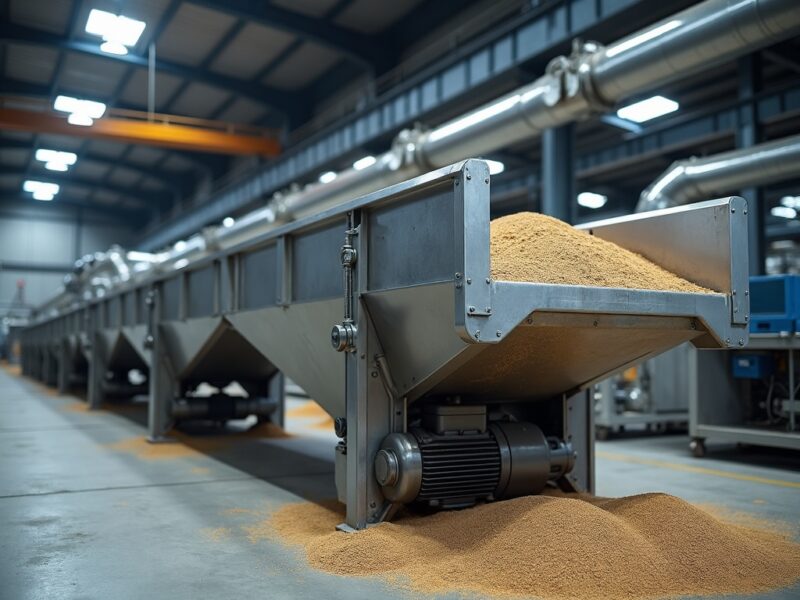
Upgrading to a variable-speed, automated feeding system fixes this. Installing a heavy-duty vibrating feeder directly beneath the dump hopper gives you controlled, continuous material flow into the primary jaw crusher while scalping out fines through an integrated grizzly screen before they ever reach the crushing chamber. That grizzly bypass alone reduces unnecessary liner wear and keeps undersized dirt from consuming crusher capacity.
Switch to Hydraulic CSS Adjustment on Secondary Crushers
Manual shim-based Closed Side Setting adjustments require a shutdown. That means every time liner wear drifts your product size out of specification, or a customer needs a different aggregate grade, you’re stopping production to make changes that hydraulic systems handle on the fly.
Hydraulic setting systems let operators compensate for wear and shift output sizing without pulling the plant offline. For high-volume sites running multiple product sizes across shifts, the cumulative time saved is substantial. It also removes the inconsistency of manual adjustment, two operators shimming the same crusher rarely land on the same setting.
Upgrade to High-Frequency Screening Decks
Standard horizontal screens are suitable for dry applications, but they can’t size moist or sticky materials. Additionally, when tons per hour increase, material carryover leads to product contamination and oversizing, necessitating more reprocessing of material.
High-frequency banana screens are multi-slope decks that alter the trajectory of the material transversely along the screen surface, which aids in separating and sizing the material. The steeper upper slopes help the material move and stratify, and the lower slopes do the fine sizing work, adhering to the same principle that makes hydrocyclones and dewaterers so effective. The result is additional screening capacity without an enlarged footprint, particularly critical for plants constrained by existing layouts.
Moist is moist and sticky is sticky. Quarry operations in wet or damp climates or where processing washes certain types of rocks should be specifying their screening equipment for those specific conditions, rather than assuming that the machine designed "adequate" will do the job when conditions aren’t perfect.
Install Intelligent Conveyor Monitoring Systems
A catastrophic belt tear on a primary conveyor can shut an entire operation down for days. With high-volume quarries producing so much material, belt mistracking, and rip damage are not a matter of if, but when if the correct monitoring is not in place.
Conveyor systems fitted with automatic optical rip detectors spot longitudinal tears the moment they happen, initiating shutdowns before a minor rip turns into replacing the entire belt. And when it comes to taking care of the belt edge, heavy-duty mechanical training idlers that self-correct misalignment under load eliminates one of the most common contributors of edge wear and structural damage.
Deploy Polyurethane and Ceramic Wear Liners at Transfer Points
Transfer chutes and drop points get beat up more than just about anywhere else in your plant. Standard steel liners are also quick to wear out under the constant barrage of rocks, granite, basalt, and other abrasive material that gets transferred in and out of a quarry. They often need to be replaced long before the structure they protect.
Modular polyurethane or ceramic embedded liners at high impact transition points can increase the life of your liners by up to 500% over steel and decrease structural noise. This is particularly important for quarries operating near residential areas or those under strict noise-abatement requirements. Workers will appreciate the sound dampening properties of polyurethane, as well.
The modular unit design allows these liners to be tipped out and replaced one section at a time, reducing downtime and maintenance costs. The secondary benefit is structural. When a liner absorbs the energy of the impact instead of simply passing it through to the walls of the transfer, the underlying steel structure will last much longer.
Connect Your Monitoring With SCADA Integration
All of the above upgrades come up short on their intended benefits if applied in singularity. Load cells beneath hoppers and conveyors beam live weight and feed-rate information directly to SCADA systems, which presents operators with a view of the entire circuit instead of asking them to react to a problem after it’s already hurt output.
Surge pile levels, feed rate variances, and conveyor load are all data points that belong in one monitoring interface. When that data is available in real-time, operators can adjust before a blockage happens, not after.
This kind of quarry is a set of dependent processes moving as fast as the slowest part. The weakest link in that chain is almost never raw crushing power: it’s the transitions between stages where the material flow breaks down. Upgrade the feed control, the wear protection, and the monitoring systems, and the crushers you have already will do a better job of their actual job.