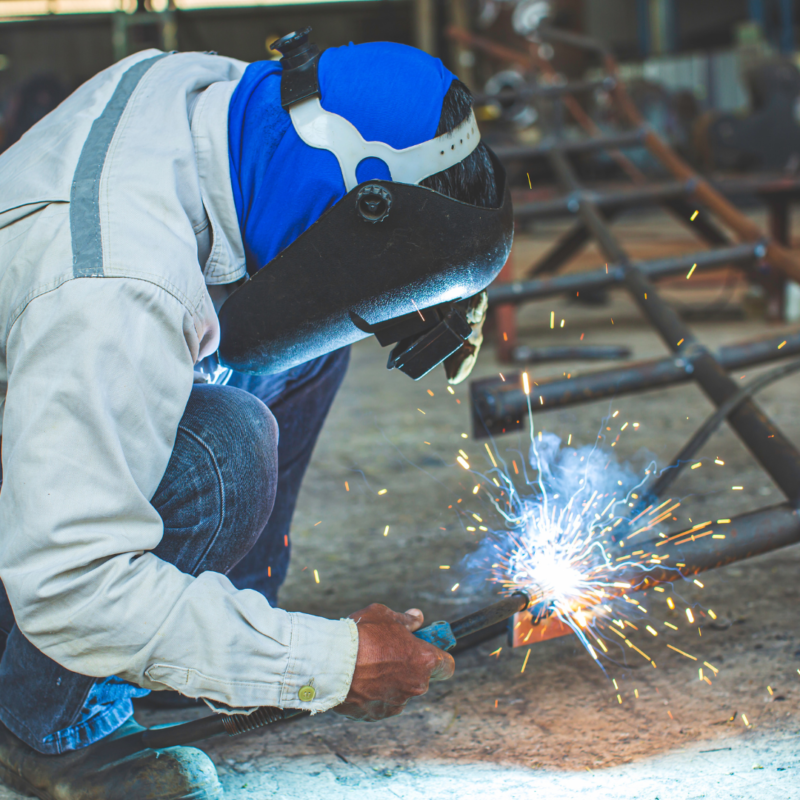
If you’re stepping into the world of welding, you’re probably already realising there’s more to it than simply melting metal together. With the many types of welding machines on the market, from arc welders to TIG machines, knowing which one is best for your job can seem overwhelming. But don’t worry, we’re about to break down the different welding machine types in straightforward terms, helping you understand what each one does and where it shines. Whether you’re an absolute beginner or brushing up your knowledge, let’s explore the main types so you can find the right fit for your needs.
The Basics: What is a Welding Machine?
Welding machines are specialised tools designed to fuse two or more pieces of metal by generating high heat that melts the metal edges together. Once the metals cool down, they form a solid joint that’s as strong (sometimes stronger) than the original pieces. With various welding processes and machine types available, each has unique features tailored to different jobs, materials, and skill levels.
When selecting a welding machine, go for those from a reliable, reputable brand, such as Kemppi welding machines. Choosing a quality brand means you’re investing in a machine that will perform well and stand the test of time—important if you’re using it frequently or for challenging tasks.

The Main Types of Welding Machines
Now, let’s look at the core types of welding machines and what sets each apart.
1. MIG (Metal Inert Gas) Welding Machines
MIG welding machines, also known as Gas Metal Arc Welding (GMAW) machines, are widely used for their simplicity and versatility. If you’re new to welding, MIG machines are a fantastic starting point. They operate by feeding a continuous wire electrode through the welding gun, which melts and joins the metals when it comes into contact with the weld area. Shielding gas (typically argon or CO2) flows through the gun to protect the weld from contaminants.
MIG welding is popular for:
- Its ease of use: suitable for beginners and experienced welders alike.
- Speed: MIG welding is fast, making it ideal for larger projects.
- Versatility: works well on various metals, including steel, aluminium, and stainless steel.
MIG welding does come with a few requirements, like having an external gas source, but it’s worth the setup for many users, especially if you’re planning to work on cars, household projects, or anything that needs precision.
2. TIG (Tungsten Inert Gas) Welding Machines
TIG welding, or Gas Tungsten Arc Welding (GTAW), is one of the most precise welding methods. It uses a tungsten electrode to produce the weld and usually requires both hands – one to control the torch and one to feed the filler material. TIG machines use a shielding gas (often pure argon) to protect the weld, and unlike MIG welding, the operator has complete control over the heat and speed.
This precision makes TIG welding ideal for:
- Thin metals: perfect for metals like stainless steel, aluminium, and copper.
- Detail work: gives exceptional control over the weld.
- Clean finishes: TIG welding produces smooth, clean welds with minimal spatter.
TIG welding is often chosen for intricate jobs, like those in the aerospace and automotive industries, as it delivers a fine finish. It can take some practice to master TIG welding, but it’s highly rewarding for those looking to specialise.
3. Stick (Shielded Metal Arc Welding) Machines
Stick welding, also known as Shielded Metal Arc Welding (SMAW), is one of the oldest welding techniques. It’s favoured for its ruggedness and adaptability, often used in construction and repair work. Stick machines work by generating an electric arc between a consumable electrode and the metal workpiece, which creates the weld. The electrode is coated in flux, which burns and forms a protective gas, eliminating the need for an external shielding gas source.
Stick welding is especially useful for:
- Outdoor welding: works well even in windy or outdoor conditions.
- Dirty or rusty materials: stick welding can handle metals with contaminants better than other methods.
- Tough jobs: known for its durability and strength in heavy-duty applications.
Stick welding might be less refined than TIG or MIG, but it’s a strong option for structural jobs or heavy equipment repair where toughness is critical.
4. Flux-Cored Arc Welding (FCAW) Machines
Flux-Cored Arc Welding (FCAW) is similar to MIG welding but uses a special tubular wire filled with flux. FCAW is well-suited to heavy-duty welding projects and performs well in outdoor settings. Since it doesn’t require an external shielding gas, it’s also more portable and adaptable to various environments.
You might choose FCAW for:
- Outdoor applications: ideal for windy conditions where shielding gas might blow away.
- High productivity: good for thick metals and heavy fabrication jobs.
- Portability: easy to transport and set up without needing extra gas tanks.
FCAW is often used in shipbuilding, construction, and other heavy fabrication industries because of its high weld deposition rate and strength.
5. Plasma Arc Welding (PAW) Machines
Though less common than the other types, Plasma Arc Welding (PAW) machines deserve a mention for their precision and versatility. PAW uses a high-velocity jet of ionised gas (plasma) to heat and melt the metals. This process is similar to TIG welding but allows for more control and can reach very high temperatures.
Plasma arc welding is excellent for:
- Precision work: delivers very high accuracy.
- High-speed operations: can be used at faster speeds than many other welding types.
- Working with small parts: common in the aerospace and electronics industries.
While PAW machines can be complex and costly, they offer unmatched precision, making them valuable in specialised industries.
6. Plastic Welding Machines
Unlike traditional welding methods designed for metal, a plastic welding machine is specifically engineered to join thermoplastic materials such as HDPE, PP, and PVC. These machines are essential in industries like water supply, gas distribution, chemical processing, and agriculture, where plastic piping systems are commonly used. By applying heat and pressure, plastic welding machines create strong, seamless joints that are critical for leak-proof and pressure-resistant applications.
There are various types of plastic welding methods, including butt fusion, socket fusion, electrofusion, and extrusion welding. Each method tends to serve different purposes depending on the material, pipe size, and job environment. Ultimately, whether used in the field or a fabrication workshop, these machines offer a reliable and efficient solution for joining plastic components with precision and long-term durability.
This precision and durability are particularly evident in butt fusion, a method highly favored for creating strong, leak-proof connections in large-diameter thermoplastic pipes. These specialized machines operate by precisely heating the ends of two pipes and then pressing them together under controlled pressure, forming a homogeneous joint that is often as strong as the pipe itself.
Such robust connections are critical for demanding applications in municipal water systems, gas distribution networks, and large-scale agricultural irrigation projects, where reliability and long-term performance are paramount. For professionals seeking advanced solutions in this area, a high-performance butt fusion welding machine offers the necessary precision and power to ensure optimal joint integrity and operational efficiency.
Similarly, achieving robust and aesthetically pleasing results in metal fabrication demands an equally high level of precision and specialized skill. High-quality sheet metal work, for instance, involves not just joining pieces but shaping durable materials like American-made steel into intricate designs for long-lasting outdoor furnishings and architectural elements. This requires a deep understanding of material properties and advanced techniques to ensure both structural integrity and visual appeal. Craftsmanship in metal extends beyond mere functionality, transforming raw materials into custom solutions that enhance residential and commercial spaces.
Finding the Right Welding Machine for You
With each welding machine offering unique benefits, understanding what you’ll be using it for is crucial. MIG welding machines are versatile and accessible for beginners. TIG welding is all about detail and finesse, perfect for intricate work. Stick welding provides durability for outdoor projects and heavy-duty repairs, while FCAW is great for outdoor and industrial jobs. Plasma Arc Welding, on the other hand, caters to highly specialised needs. Whichever machine you choose, go for a reputable brand to ensure performance, durability, and support when you need it most.
Final Thoughts
Picking the right welding machine can make all the difference in your work’s quality and ease. By understanding what each machine type offers and where it excels, you’re better equipped to choose one that matches your projects and skill level. Take your time, consider your needs, and enjoy the satisfaction that comes with quality welding work.